
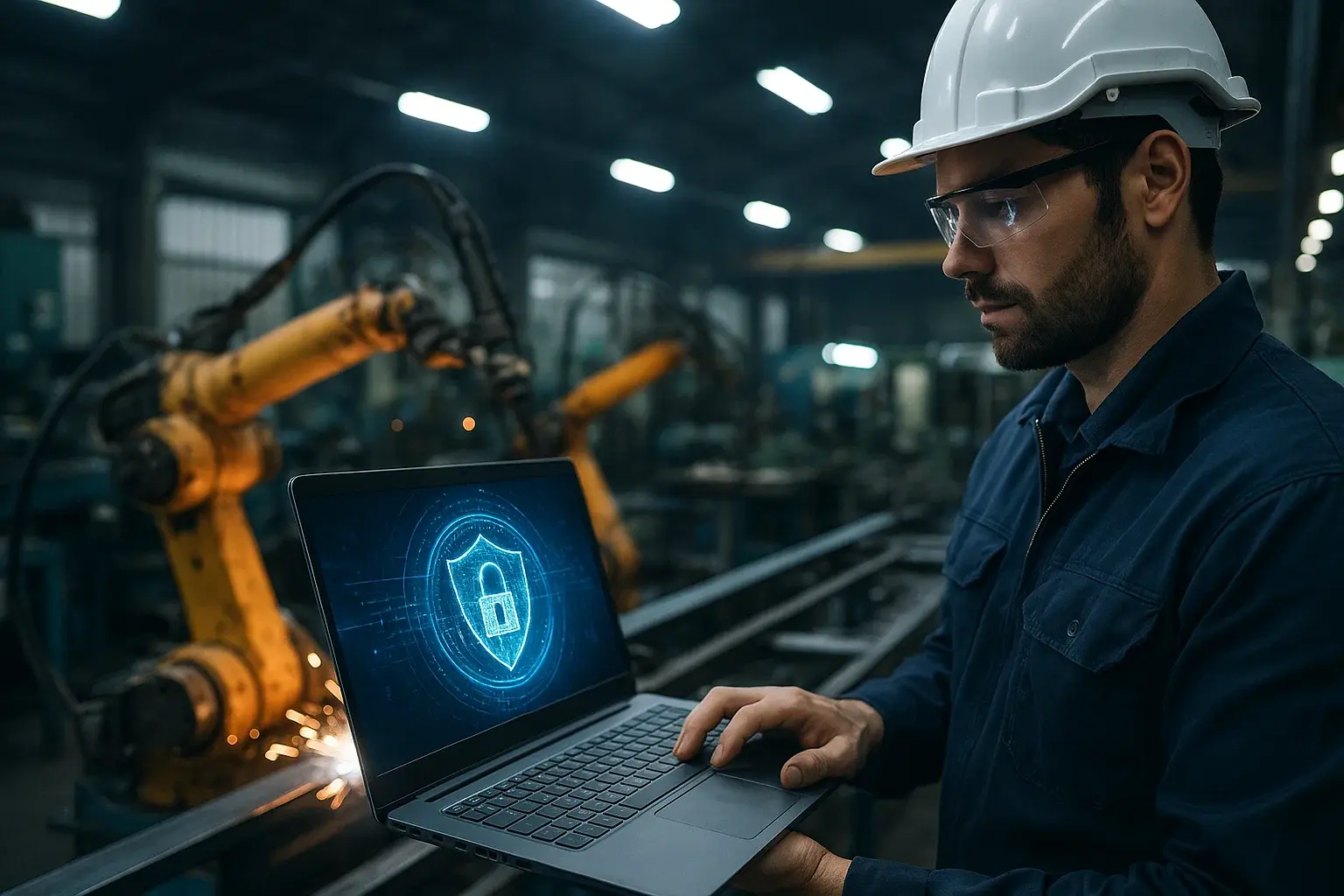
If you work in the manufacturing sector, you know that stopping a production line is not an option. Every minute of downtime costs money, disrupts deliveries, breaks contracts, and damages your company’s reputation. Now imagine that stoppage isn’t caused by a mechanical failure, but by a cyberattack.
Today, manufacturing is one of the most targeted industries worldwide. The rise of Industry 4.0, plant digitalization, the convergence of IT and OT (Operational Technology), and reliance on third-party providers have unlocked efficiency and innovation—but also introduced new cyber risks.
At TecnetOne, we see this often: manufacturers invest heavily in automation but overlook cybersecurity. The result is a highly productive yet vulnerable environment. In this article, we explain why cybersecurity is critical in manufacturing, which regulations and standards apply, and how you can protect your operations without slowing innovation.
Why Manufacturing Has Become a Prime Target for Cyberattacks
For years, manufacturing wasn’t a top target for cybercriminals. That has changed dramatically. Today, it’s one of the industries most affected by ransomware and cyber sabotage.
Here’s why attackers focus on manufacturing:
- High operational dependency: Production downtime leads to immediate financial losses.
- Legacy OT systems: Many industrial systems were not designed with cybersecurity in mind.
- IT/OT convergence: Connecting business systems to industrial equipment expands the attack surface.
- Complex supply chains: Vendors, integrators, and contractors often have remote access.
- Pressure to resume operations: Many companies pay ransoms just to restart production.
For attackers, manufacturing represents fast payouts and high-impact disruption.
The Impact of a Cyberattack Goes Beyond Digital Systems
A cybersecurity incident in manufacturing doesn’t just affect servers or email—it directly impacts physical operations.
Real-world consequences include:
- Partial or complete shutdown of production lines.
- Damage to industrial machinery.
- Loss of recipes, configurations, or blueprints.
- Delayed deliveries and contractual penalties.
- Safety risks for plant personnel.
- Theft of intellectual property and trade secrets.
At TecnetOne, we’ve handled cases where ransomware forced entire plants offline for days. The financial impact can reach millions per hour.
Regulations and Standards Affecting the Manufacturing Sector
Manufacturing may not seem highly regulated in cybersecurity—but in reality, multiple laws, standards, and contractual requirements apply, directly or indirectly. Failing to comply can result in fines, audits, or loss of certifications.
Federal Law on Protection of Personal Data (LFPDPPP – Mexico)
Manufacturers often process personal data from employees, suppliers, distributors, and customers.
This law requires:
- Technical and administrative security measures.
- Access controls.
- Protection against data loss, alteration, or unauthorized access.
- Breach notification procedures.
Noncompliance can lead to fines of up to 50 million pesos, enforced by the INAI.
ISO Standards (ISO 27001 & ISO 22301)
Many manufacturing companies adopt these standards to:
- Demonstrate information security best practices.
- Ensure business continuity.
- Meet international customer requirements.
A serious cyber incident may cause loss of certification, affecting contracts and exports.
Industrial Security Standards (IEC 62443)
IEC 62443 is essential for securing industrial and OT environments, including:
- Industrial Control Systems (ICS).
- SCADA systems.
- PLCs and automation networks.
It promotes segmentation, access control, and defense-in-depth—key principles for modern plants.
Customer and Supply Chain Requirements
Many manufacturers must meet cybersecurity requirements imposed by global customers, especially in industries such as:
- Automotive.
- Aerospace.
- Electronics.
- Energy.
Failure to comply can mean exclusion from the supply chain.
Why Cybersecurity Is Essential for Compliance
Most compliance failures in manufacturing stem from:
- Lack of visibility in OT environments.
- Poorly managed remote access.
- Unpatched systems.
- Absence of continuous monitoring.
A strong cybersecurity strategy allows you to:
- Protect both IT and OT environments.
- Provide evidence during audits.
- Reduce the impact of incidents.
- Maintain production continuity.
In short, cybersecurity becomes a business enabler—not a barrier.
Key Benefits of Strengthening Cybersecurity in Manufacturing
1. Production Continuity
Early detection and rapid response prevent unexpected downtime that impacts revenue and deliveries.
2. Intellectual Property Protection
Blueprints, designs, formulas, and processes are critical assets that must be safeguarded against industrial espionage.
3. Regulatory and Contractual Compliance
Strong controls help you avoid fines, penalties, and legal disputes.
4. Reduced Operational and Safety Risks
Cyberattacks on industrial systems can endanger human safety. Cybersecurity is also a workplace safety issue.
5. Greater Trust From Customers and Partners
Secure manufacturers are seen as reliable, mature business partners.
Similar titles: The Importance of Cybersecurity in the Healthcare Sector
What a Modern Manufacturing Cybersecurity Strategy Should Include
At TecnetOne, we recommend a comprehensive approach tailored to industrial environments:
1. IT + OT Security Integration
- Full inventory of industrial assets.
- Network segmentation.
- Controlled communication between IT and OT.
2. Zero Trust for Manufacturing
- Never trust by default—even inside the plant.
- Strong authentication for remote access.
- Least-privilege access for operators and vendors.
3. 24/7 Monitoring With a SOC
A Security Operations Center (SOC) detects anomalies before they cause production outages.
4. Immutable Backups
Protect critical configurations and industrial systems from ransomware.
5. Industrial Incident Response Plans
Manufacturing requires OT-specific response procedures—not just IT playbooks.
6. Workforce Training
Engineers, operators, and administrative staff must understand basic cybersecurity risks.
A Realistic Scenario: When Cybersecurity Fails
Imagine a plant where a vendor accesses a control system remotely without MFA.
The credentials are compromised.
An attacker deploys ransomware affecting servers and OT systems.
Production stops, orders are delayed, and customers demand answers.
The cost isn’t just technical:
- Lost production hours.
- Contractual penalties.
- Emergency audits.
- Reputational damage.
All due to missing basic security controls.
Conclusion: Cybersecurity Is Part of Manufacturing Productivity
Cybersecurity in manufacturing is no longer just an IT concern—it’s about operations, compliance, physical safety, and business continuity.
At TecnetOne, we believe manufacturers need practical strategies aligned with plant realities and regulatory demands.
Investing in cybersecurity doesn’t slow production—it protects it.
And in an industry where every minute counts, being prepared makes the difference between staying operational or shutting everything down.
