Ransomware remains one of the most disruptive threats for businesses around the world. It not only drains IT budgets but can also paralyze entire operations within hours. For technical teams already working at their limit, a single attack can result in days of downtime, loss of critical information, and a direct impact on the business.
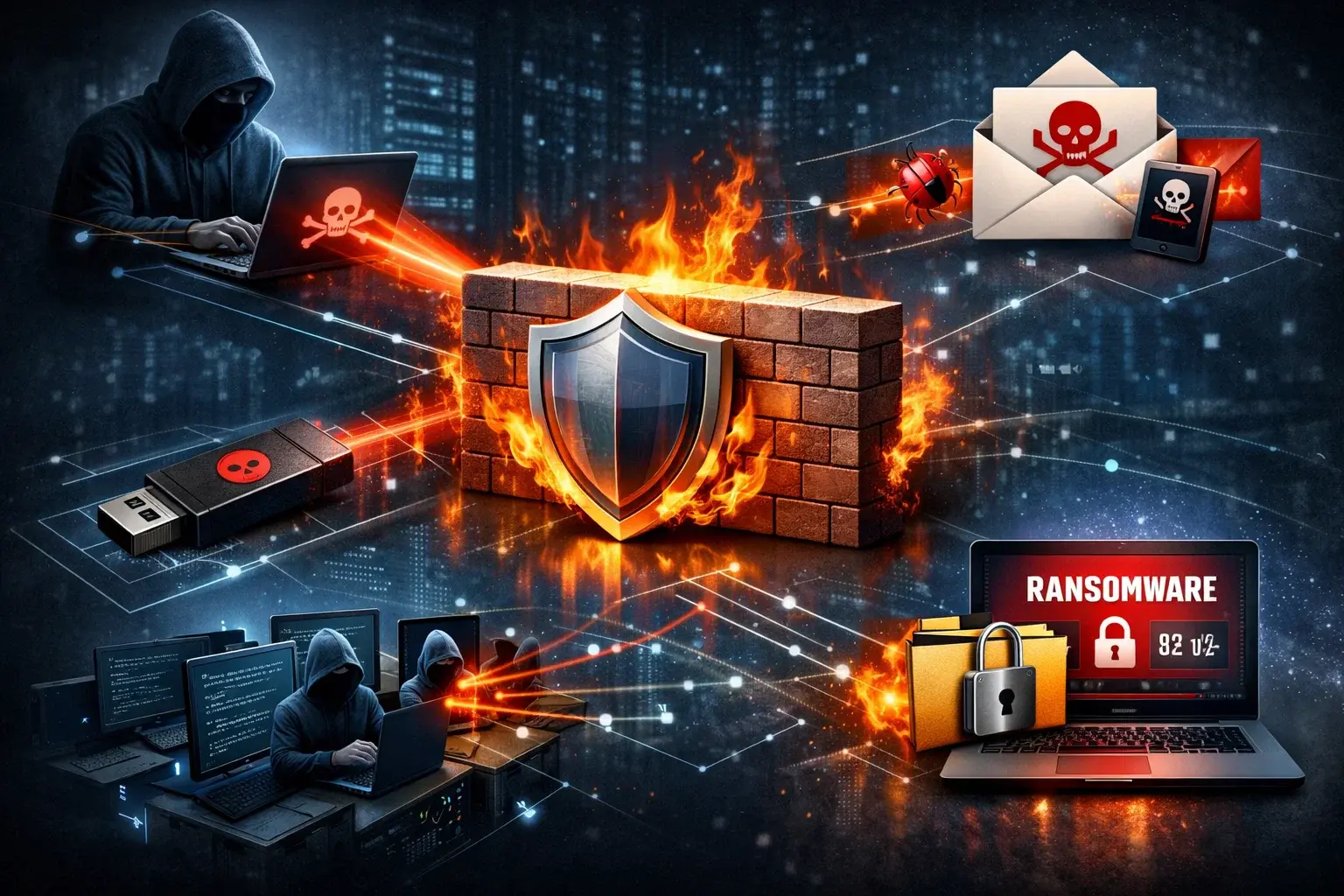
At TecnetOne, we see this scenario every day. While many companies prioritize endpoint protection, the firewall continues to be one of the most effective tools for stopping ransomware before it causes damage—and for containing it if it manages to breach the security perimeter.
In this article, we’ll explain how to intelligently configure your firewall to close the gaps ransomware exploits and strengthen your organization’s resilience against these types of attacks.
The Firewall as the First Line of Defense
A firewall acts as a gatekeeper between your internal network and the outside world. It inspects all traffic attempting to enter or leave your network to determine whether it’s safe, based on predefined rules.
What Can a Firewall Do?
A modern firewall can:
-
Block known malicious IP addresses commonly used to distribute ransomware or related malware.
-
Control which ports and services are exposed externally, reducing attack vectors.
-
Inspect encrypted traffic to detect hidden threats, even when HTTPS is used.
-
Segment the internal network to prevent an attack from spreading from one system to another if it’s already inside.
These functions make the firewall an essential tool not only for preventing ransomware from entering, but also for mitigating its impact if part of the network is compromised.
5 Firewall Functions That Block Ransomware
1. Reducing the Attack Surface
The first line of defense is minimizing as much as possible what is exposed to the internet or external networks. This can be achieved through:
Closing Unnecessary Ports and Services
Every exposed service (like RDP, SMB, or FTP) is a potential entry point for attackers. If it’s not needed, it should be blocked by the firewall.
Regular Patching and Updates
Unpatched vulnerabilities are one of the most common causes of infection. Keeping the firewall firmware and other systems up to date is critical to reducing these gaps.
Strong Authentication
Implementing multi-factor authentication (MFA) and controlling administrative access to the firewall prevents attackers from gaining direct control over these essential defenses. Goal: Close as many entry points as possible so attackers have no initial access routes.
2. Encrypted Traffic Inspection (TLS/SSL)
Today, over 90% of web traffic is encrypted with HTTPS. While this is great for privacy, it can also hide threats if not properly inspected.
What Does Traffic Inspection Do?
When a firewall performs TLS inspection, it:
-
Temporarily decrypts the encrypted traffic
-
Scans for malicious patterns within it
-
Re-encrypts the information before sending it to its destination
This allows the firewall to detect ransomware hiding inside seemingly legitimate connections. Additionally, deep packet inspection (DPI) combined with systems like an Intrusion Prevention System (IPS) can identify threats that other devices might miss.
Read more: Ransomware in Mexico: Impact on IT and How to Prevent It
3. Implementing Zero Trust Principles
The traditional approach of “trusting everything inside the network” no longer works against modern threats. This is where Zero Trust architecture comes in: never trust, always verify. A firewall can help enforce this principle in several ways:
Continuous Verification
Every access to a resource—whether internal or external—requires verifying the identity and device status.
Microsegmentation
This means dividing the network into small, isolated zones. If an attack reaches one segment, it can’t freely move to others.
Endpoint Security Integration
By connecting the firewall with endpoint protection solutions (like EDR or modern antivirus), a compromised device can be automatically isolated as soon as suspicious behavior is detected. Goal: Eliminate default trust so that every access attempt, even internal, is analyzed and controlled.
4. Automatic Detection and Response
Even with all the above defenses in place, a sophisticated attack might still find a way in. That’s why it’s essential for the firewall not only to block traffic but also to detect abnormal behavior and respond automatically.
How Can the Firewall Detect Internal Threats?
Anomaly Detection
Through traffic pattern analysis, the firewall can identify unusual behavior (like a PC attempting to connect to many internal systems or command-and-control servers).
Integration with NDR (Network Detection and Response)
NDR analyzes network traffic to detect typical ransomware patterns (like lateral movement), even if they don’t match known signatures.
Automated Response
When suspicious behavior is detected, the firewall can:
-
Isolate affected devices
-
Block specific ports or IP addresses
-
Notify security teams or the SOC
These automated responses drastically reduce the time between detection and mitigation, limiting the damage before the ransomware can encrypt critical data.
Read more: Hiring a SOC: How to Do It and What to Consider
5. Hardening and Continuous Monitoring
Finally, security isn’t something you set once and forget. It must be a continuous and adaptive process.
Active Monitoring
Sending firewall logs and alerts to SIEM systems or centralized platforms allows you to:
-
Review attack patterns
-
Detect new trends
-
Respond to emerging threats
Proactive monitoring helps identify suspicious activity before it turns into a devastating attack.
Rule Maintenance
Over time, many organizations accumulate unnecessary or misconfigured rules that create security gaps. Regularly reviewing these rules helps keep the firewall clean and effective. Hardening involves applying secure configurations and removing any unnecessary attack surfaces.
Conclusion: The Firewall Remains a Key Tool in Stopping Ransomware
Today’s firewalls do much more than just filter traffic. When properly configured, they help reduce the risk of infection, detect suspicious behavior, and contain a ransomware attack before it causes serious damage.
That said, no single control works in isolation. Effective cybersecurity requires a layered approach that combines a firewall, endpoint protection, backups, secure authentication, and user awareness.
At TecnetOne, we help companies implement this comprehensive approach, integrating next-generation firewalls like those from Sophos into security strategies designed to protect business continuity.
A well-managed firewall not only helps stop ransomware—it becomes a critical ally against today’s evolving threats.


I'm passionate about SEO and copywriting at TecnetOne, where I combine my technical knowledge with optimization skills and persuasive writing. I use advanced tools and techniques to boost companies' online visibility, making sure they stay at the forefront of technology and achieve outstanding results in a competitive digital landscape. My goal is to build effective strategies that drive our clients' technological and commercial success.