
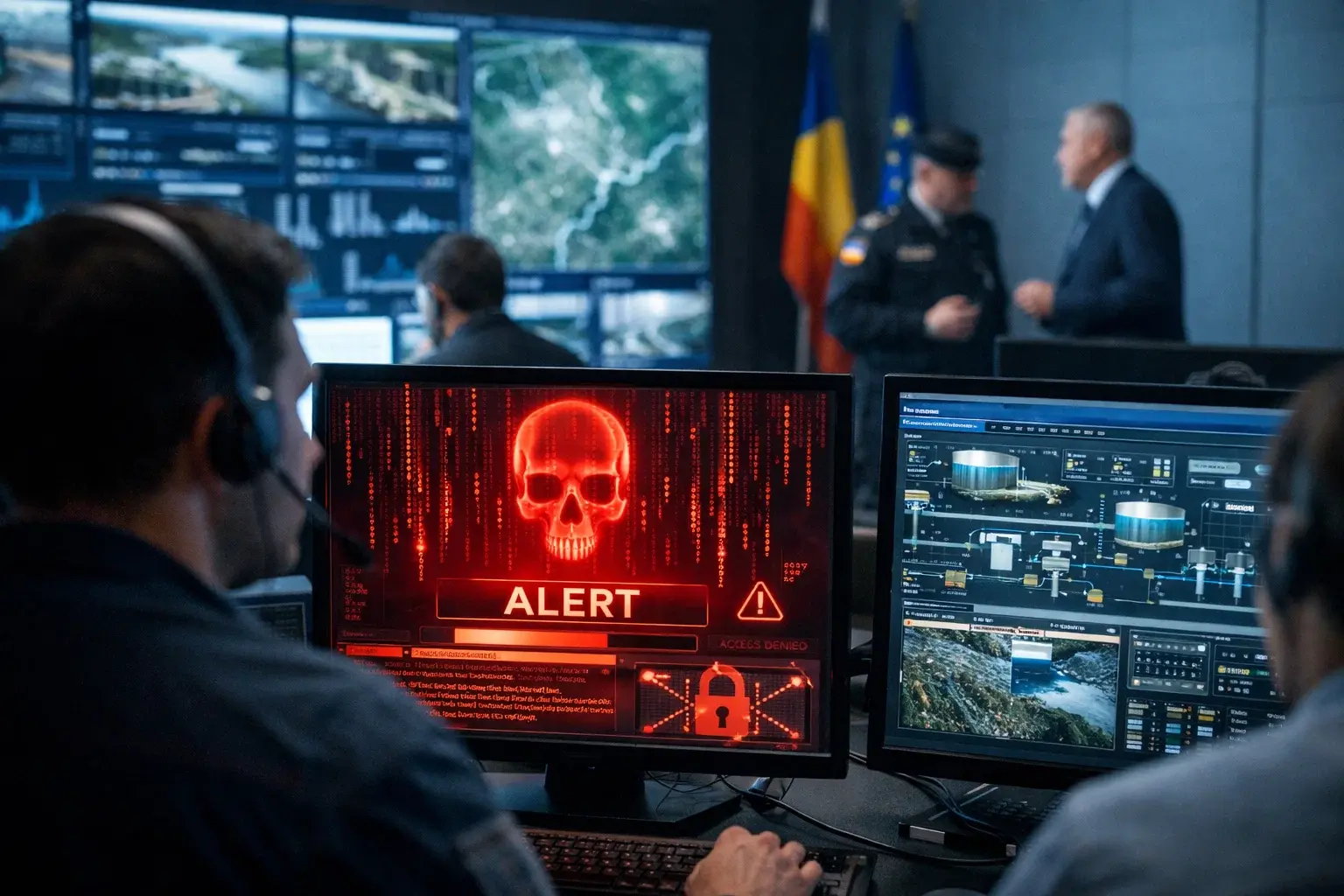
When you think of cyberattacks, you probably imagine banks, tech giants, or digital platforms. But cybersecurity experts are far more concerned about another type of target: critical infrastructure. That’s exactly what happened in Romania, where the national water management authority confirmed a ransomware attack affecting thousands of IT systems.
At TecnetOne, we analyze this kind of incident because it’s a clear warning: even essential services like drinking water are now in the crosshairs of cybercriminals. The good news? In this case, the water supply remained uninterrupted. The bad news? The attack reveals just how thin the line can be between administrative systems and critical operations.
What Happened at Romanian Waters
The Administrația Națională Apele Române—known as Romanian Waters—is responsible for managing water resources nationwide. Over the weekend, the institution fell victim to a ransomware attack that severely impacted its IT infrastructure.
Romania’s National Cybersecurity Directorate (DNSC) confirmed that approximately 1,000 systems were affected across the central organization and 10 out of its 11 regional offices, showing the attack was broad and coordinated.
Key IT systems were compromised, forcing authorities to activate emergency protocols and deploy specialized technical teams.
Systems That Were Affected
From an IT perspective, this was no minor incident. Compromised systems included:
- GIS servers (Geographic Information Systems)
- Database servers
- Windows workstations
- Windows Server infrastructure
- Email and web services
- DNS servers, crucial for internal connectivity
These systems are critical for administrative management, data analysis, and coordination between regional offices. Without them, visibility, communication, and control are severely diminished.
Learn more: Mexican Water Infrastructure Under Fire: Rising Cyberattacks
The Good News: Critical Operations Were Not Affected
This is the most important takeaway from the incident—and the reason this didn’t turn into a full-blown crisis. Romanian authorities confirmed that operational technology (OT) systems, which directly control the water infrastructure, were not compromised.
In practical terms:
- Water supply continued normally
- No impact on dams, canals, pumping stations, or distribution systems
- No immediate risks to the population were reported
This segmentation between IT and OT systems was key to containing the damage. It’s a clear example of why network segmentation and layered security architecture aren’t optional—they're essential.
How the Authorities Responded
Once the incident was detected, a coordinated response was launched involving:
- The DNSC (National Cybersecurity Directorate)
- Romanian Waters’ internal tech teams
- Cyberint, Romania’s cyber intelligence center linked to the SRI
- Other specialized agencies
They are now working together to investigate the origin of the attack, contain its spread, and restore affected services.
One key detail: Romanian Waters was not yet integrated into Romania’s national cybersecurity protection system managed by the CNC. Following the attack, the process to join these advanced defense platforms was initiated to protect this and other critical infrastructures.
What We Know About the Ransomware
Investigators confirmed that the attackers used Windows BitLocker to encrypt compromised systems. BitLocker is a legitimate encryption tool built into Windows—highlighting a growing trend: attackers using native tools to avoid early detection.
After encryption, the attackers left a ransom note, demanding that the organization contact them within seven days. So far:
- The ransom amount has not been disclosed
- The responsible group remains unknown
- The initial attack vector is still under investigation
The Official Recommendation: Do Not Negotiate
The DNSC was clear: do not contact or negotiate with the attackers. The goal of this stance is twofold:
- Avoid directly funding cybercrime
- Prevent encouraging future attacks on critical infrastructure
Instead, IT teams were instructed to focus entirely on restoration, forensic analysis, and strengthening defenses.
Similar titles: Massive Outage in Europe: Cyber Attack Suspected in Spain and France
A Global Warning: The Bigger Context
This attack doesn’t exist in a vacuum. In early December, agencies like CISA (USA), the FBI, NSA, Europol, and others issued a joint warning: pro-Russian hacktivist groups are escalating attacks on critical infrastructure globally.
Groups mentioned include:
- Z-Pentest
- Sector16
- NoName
- Cyber Army of Russia Reborn (CARR)
They’ve targeted sectors like energy, transportation, public services, and water, using DDoS, ransomware, and digital sabotage.
While this specific attack hasn’t been attributed to any of these groups yet, the broader context reinforces the idea that critical infrastructure is under constant threat.
Lessons Every Organization Should Learn
Even if you don’t work in water management, this case has key takeaways that apply to any organization:
- Segregate IT and OT to protect essential services
- Not every attack aims for physical damage—many seek pressure and profit
- Critical infrastructure is a top-tier target
- Integrating with national cyber defense systems can’t be postponed
- Ransomware is no longer just a private sector problem
At TecnetOne, we stress that cybersecurity should be viewed as a strategic pillar, not a technical function. When essential services are affected, the consequences go far beyond encrypted servers.
A Clear Warning for Governments and Businesses
The Romanian Waters case proves no one is off the radar. Even public institutions, essential to daily life, can be vulnerable without updated defenses and robust architectures.
Today it was water in Romania. Tomorrow it could be energy, transport, or healthcare in another country. The difference between a serious incident and a national crisis often lies in decisions made long before the attack.
Securing critical infrastructure is no longer optional or a long-term investment—it’s an urgent necessity. This attack, while contained, is a loud and clear signal.