 New Malware Campaign: A Real Threat to Mexico’s National Security" loading="eager">
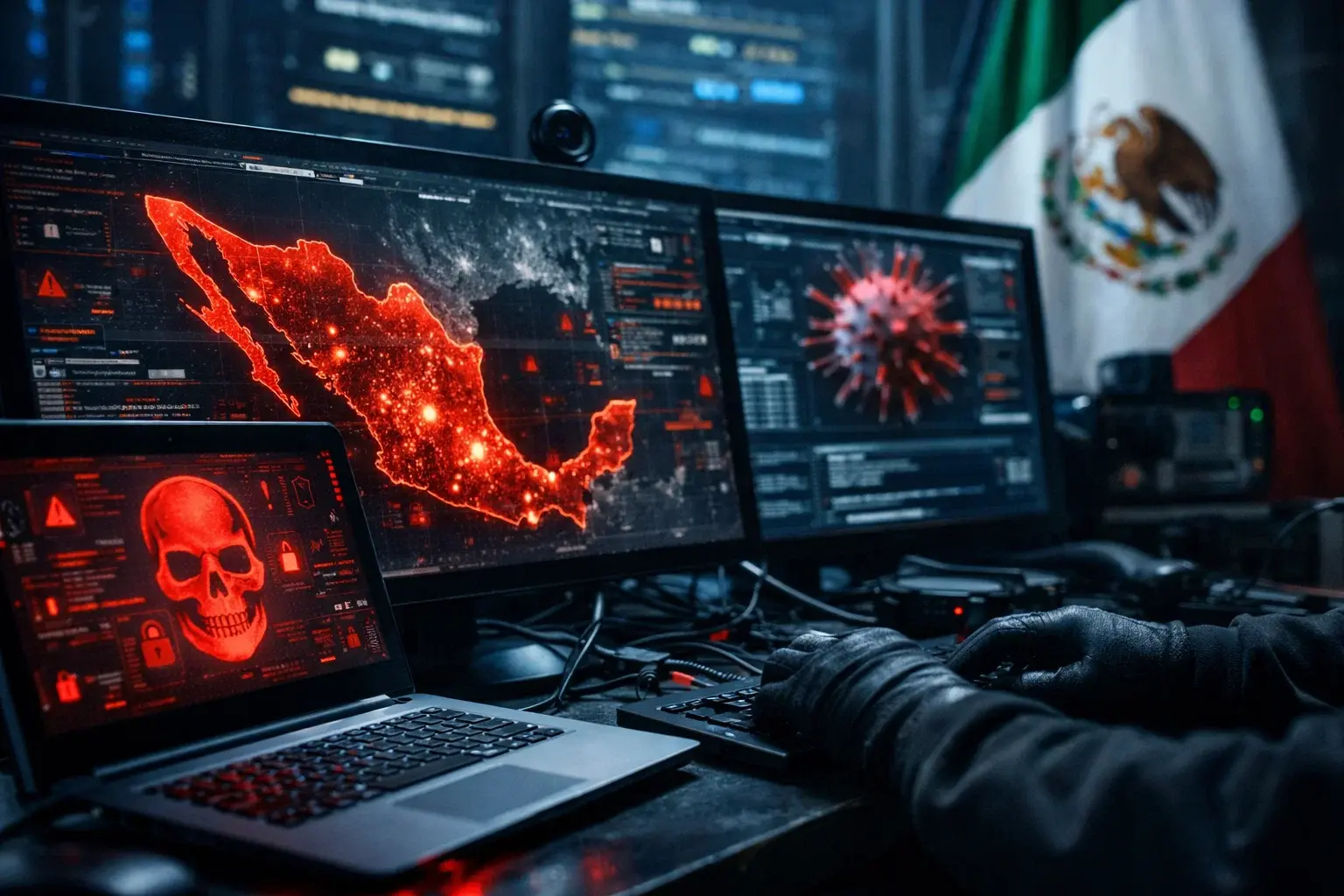
When we talk about cybersecurity, you often think about banking fraud, stolen passwords, or email scams. However, some threats go far beyond the individual level and directly affect national security. That is the case with the new malware campaign known as SHADOW#REACTOR, which has already raised serious alarms in Mexico.
At TecnetOne, we want to help you understand what is happening, why this threat is so serious, and what it means for the State, public institutions, and ultimately society as a whole.
What Is SHADOW#REACTOR and Why Is It So Dangerous?
SHADOW#REACTOR is not a typical malware campaign. It is a sophisticated operation designed to deploy Remcos RAT, a remote access trojan that allows attackers to take full control of infected systems.
Unlike opportunistic malware that targets anyone it can reach, campaigns like this are defined by:
- Clearly defined targets
- Advanced evasion techniques
- A strong focus on remaining hidden for long periods of time
This places SHADOW#REACTOR much closer to cyber‑espionage than to traditional cybercrime.
A Direct Risk to the Mexican Government
Attack surface analysis reveals a deeply concerning fact: at least 118 Mexican government agencies show conditions that could be exploited using techniques similar to those employed by SHADOW#REACTOR.
This means the threat is neither hypothetical nor isolated. It represents a systemic risk capable of affecting key institutions at:
- Federal level
- State level
- Municipal level
When such a large number of public bodies are potentially exposed, the issue stops being purely technical and becomes strategic.
Learn more: Mexico at a Crossroads: Build a Strong Cybersecurity Strategy
Advanced Techniques Designed to Evade Detection
One of the most alarming aspects of this campaign is its technical sophistication. SHADOW#REACTOR uses carefully crafted infection chains specifically designed to bypass traditional defenses.
Notable techniques include:
- Obfuscated VBS and PowerShell scripts
- In‑memory payload execution without writing files to disk
- Abuse of legitimate operating system tools such as MSBuild.exe, a technique known as Living off the Land
- Advanced code protection using packers like .NET Reactor
These tactics make detection extremely difficult for conventional antivirus solutions and poorly configured security systems.
What Remcos RAT Can Do Once Inside
When Remcos RAT successfully infects a government system, the consequences go far beyond simple remote access. This type of malware enables capabilities that pose a direct threat to national security, including:
- Continuous monitoring of compromised systems
- Access to internal communications
- Theft of high‑privilege credentials
- Exfiltration of sensitive or classified documents
- Selective manipulation or deletion of information
- Preparing the environment for follow‑up attacks
In the wrong hands, Remcos becomes an ideal tool for long‑term digital espionage operations.
Strategically Sensitive Agencies Potentially Affected
The severity of this threat increases when you consider the type of institutions that could be compromised. Among the most strategically important are:
- National Commission for Nuclear Safety and Safeguards (CNSNS), which manages critical information related to nuclear facilities and radioactive materials
- Mexico City Attorney General’s Office, responsible for criminal investigations and highly sensitive evidence
- Tax and fiscal portals, which store financial data of citizens and businesses
- State and municipal governments, responsible for essential services such as water, security, transportation, and public administration
The diversity of sectors shows that the risk is cross‑cutting, not limited to a single domain.
Real Impact on National Security
Compromise of government systems through campaigns like SHADOW#REACTOR can lead to profound and lasting consequences:
- Loss of Digital Sovereignty
When external actors maintain persistent access to state networks, the ability to control and protect strategic information is severely weakened.
- Institutional and Political Espionage
Silent monitoring of emails, documents, and internal communications can expose strategies, decisions, and policies before they become public.
- Risks to Critical Infrastructure
Systems tied to energy, water, education, or public services can become entry points for attacks with major social impact.
- Preparation for More Aggressive Attacks
RATs are often just the first stage. They can be followed by targeted ransomware, digital sabotage, or disinformation campaigns based on stolen real‑world data.
Why Early Detection Is Critical
One of the greatest dangers of threats like this is their ability to remain hidden. Without early detection, attackers can stay inside networks for months—or even years—quietly collecting sensitive information.
At TecnetOne, we emphasize that government cybersecurity cannot rely solely on reactive tools. It requires:
- Continuous monitoring
- Threat intelligence
- Behavioral analysis
- Inter‑agency coordination
Similar titles: Mexican Water Infrastructure Under Fire: Rising Cyberattacks
Cybersecurity as a Pillar of National Security
The fact that at least 118 agencies may be at risk sends a clear message: cybersecurity must be treated as a core element of national security, on par with physical, energy, or border security.
It is not just about protecting servers, but about:
- Ensuring institutional stability
- Protecting citizens’ information
- Preserving public trust
- Maintaining the operational capacity of the State
What Mexico Should Do in This Scenario
Beyond technical analysis, campaigns like SHADOW#REACTOR must be understood as potential cyber‑espionage operations with strategic implications. Addressing them requires:
- Strengthening national cyber defense capabilities
- Investing in specialized talent and training
- Improving coordination across government agencies
- Treating digital intelligence as a strategic asset
Protecting state systems ultimately means protecting national security.
Conclusion: A Warning That Must Not Be Ignored
SHADOW#REACTOR is not just “another malware strain.” It is a clear signal that Mexico—like many other countries—is firmly on the radar of advanced digital threats.
At TecnetOne, we believe that understanding these campaigns is the first step toward confronting them. Prevention, visibility, and preparedness remain the strongest defenses in a world where cyberspace has become a silent—but decisive—battlefield.