 Cyberwarfare and Maduro’s Fall: Power in the Digital Age" loading="eager">
If you still believe international conflicts are defined solely by tanks, soldiers, and airstrikes, it’s time to reconsider. Today, cyberwarfare has become a strategic weapon capable of destabilizing governments, crippling critical infrastructure, and sowing social confusion—all without a conventional invasion.
Recent events in Venezuela have reignited this debate. Beyond the political and media impact, what happened raised a crucial question: To what extent can cyberspace tip the balance during military operations or regime change?
At TecnetOne, we explain why this episode is a clear example of how modern warfare is no longer confined to physical battlegrounds—but includes the digital realm.
Cyberspace: The New Battlefield
In modern conflicts, cyberspace acts as a force multiplier. It doesn’t replace traditional military action, but it complements and enhances it. Attacking key digital systems before or during an offensive can seriously weaken a state's ability to respond.
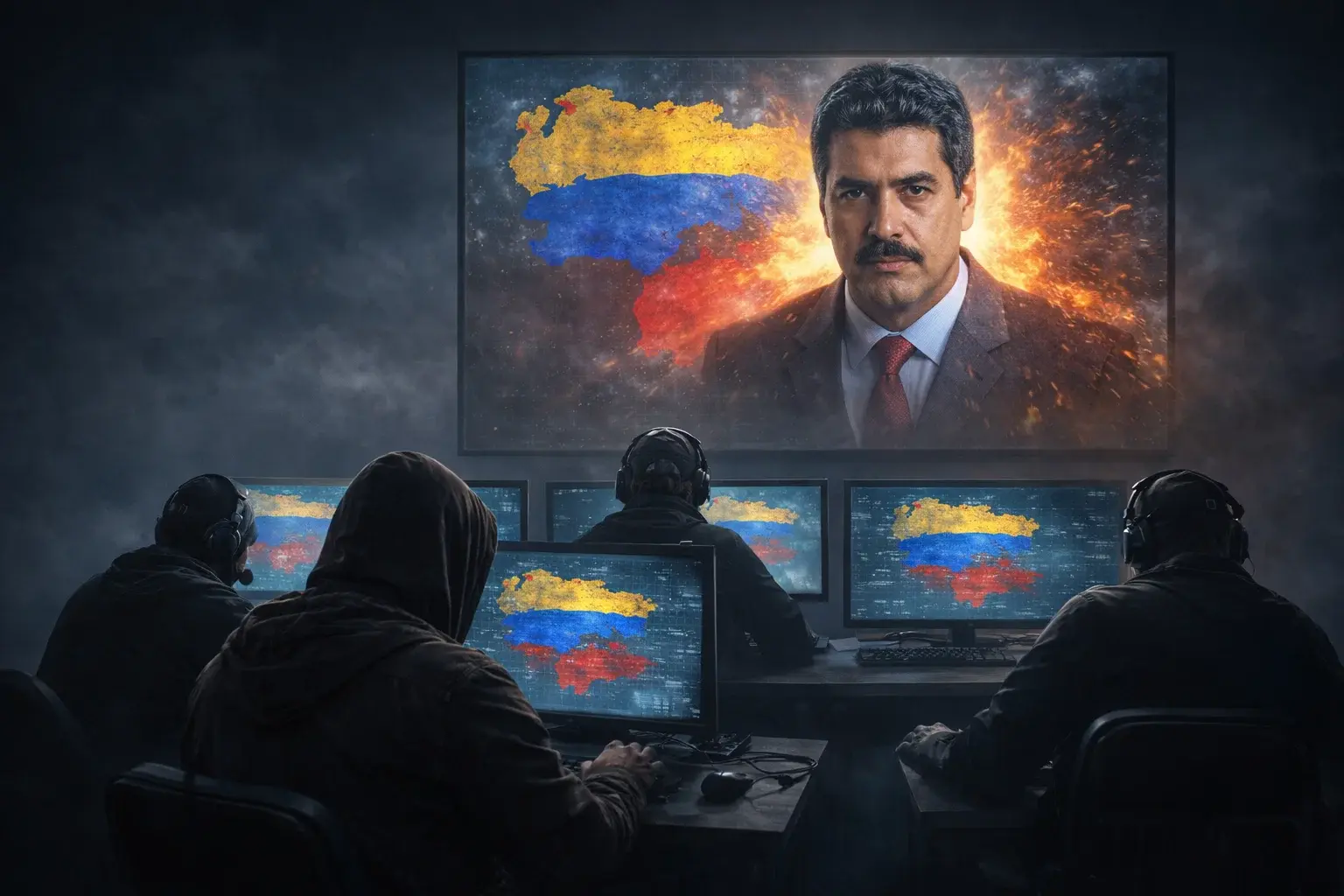
In Venezuela, during a large-scale offensive, reports emerged of explosions, low-flying military aircraft, and widespread electrical failures in Caracas. Hours later, Nicolás Maduro was captured and taken out of the country. While no official confirmation of a cyberattack has been issued, the context and later statements opened the door to an unsettling possibility: the coordination of physical and digital operations.
This kind of scenario fits perfectly within the framework of modern cyberwarfare.
What Cyberwarfare Aims to Do
Cyberwarfare goes far beyond espionage or information theft. Its objectives are broader and more disruptive. Such operations typically aim to:
- Interrupt essential services like electricity, telecom, or transportation
- Undermine government command and control capabilities
- Generate confusion and fear among civilians
- Hinder coordination among defense and security forces
Disrupting these pillars can deliver psychological and operational blows just as effective as direct military action.
Read more: How to Combat AI-Powered Social Engineering Attacks
Critical Infrastructure: The Most Vulnerable Target
One of the most notable aspects in Venezuela was the failure of the power grid. Critical infrastructure—energy, water, communications, transport—is especially vulnerable in cyberwarfare scenarios.
Weeks before the events, reports surfaced of cyber incidents targeting Venezuela’s energy systems. This suggests sabotage is rarely random—it’s part of a broader strategy to weaken a state from within.
From a cybersecurity perspective, this underscores a fundamental truth: if your country or organization depends on digital systems, those systems are now strategic targets.
Disinformation: The Silent Weapon That Amplifies Chaos
As the events unfolded, social media flooded with fake videos, doctored images, and AI-generated content. Whether you’re a user or professional, distinguishing real from fake became nearly impossible in real time.
This wasn’t a side effect—it was a tactic. In so-called hybrid warfare, cyber operations, information manipulation, and military actions converge to strike from multiple fronts at once.
The result?
- People don’t know what to believe
- Decisions are made under pressure and with incomplete information
- Panic and social disorganization spread quickly
In this landscape, disinformation becomes as potent a weapon as any virus or malware.
Hybrid Warfare: The New Model of Conflict
What happened in Venezuela fits a broader and increasingly common pattern: hybrid warfare. There’s no clear line between peace and war. Operations unfold simultaneously across multiple domains:
- Military
- Digital
- Informational
- Economic
- Psychological
In this model, cyberwarfare doesn’t act alone. It’s one cog in a larger strategy designed to destabilize opponents—often without a formal declaration of war.
What Other Nations Should Learn
You might think such a scenario feels far removed from your environment. But the Venezuelan case offers clear lessons for countries like Mexico or any nation with a digitalized economy and public services.
Today, sectors like:
- Energy
- Telecommunications
- Transportation
- Public services
- Finance
depend on interconnected digital systems. This makes them prime targets if they lack strong cybersecurity frameworks.
At TecnetOne, we constantly emphasize: the question isn’t if an attack might happen, but when—and how ready you are to respond.
You might be interested in: Cyberespionage Against Executives and Politicians
Resilience: The Key to Cyberwarfare Preparedness
The best defense against cyberwarfare isn’t just technology—it’s comprehensive preparation. That includes:
- Strengthening critical infrastructure cybersecurity
- Implementing clear incident response plans
- Running regular simulations and stress tests
- Actively countering disinformation
- Training technical and executive teams in digital crisis management
Digital resilience isn’t improvised—it’s built through investment, planning, and foresight.
The Role of Companies and Organizations
It’s not just states at risk. Businesses—especially those in strategic sectors—can become collateral damage or direct targets of advanced cyber operations.
If you work in or manage an organization, this type of conflict reinforces an essential truth: cybersecurity is no longer a technical afterthought—it’s a matter of business continuity, reputation, and operational stability.
At TecnetOne, we help organizations understand this new context, assess their risk exposure, and prepare for scenarios that once seemed like science fiction.
Conclusion: The Future of Conflict Is Already Here
Cyberwarfare is not a future threat. It’s a present reality. The Venezuelan case—regardless of its political complexity—shows how cyberspace can play a decisive role in critical moments.
As a professional, business, or citizen, understanding how these conflicts evolve is key to anticipating risks and making better decisions.
The combination of digital attacks, disinformation, and vulnerable infrastructure is a powerful reminder that modern security is no longer limited to physical borders.
Prevention, preparation, and awareness remain the most effective tools to face this new reality.
Being informed is your first line of defense.