
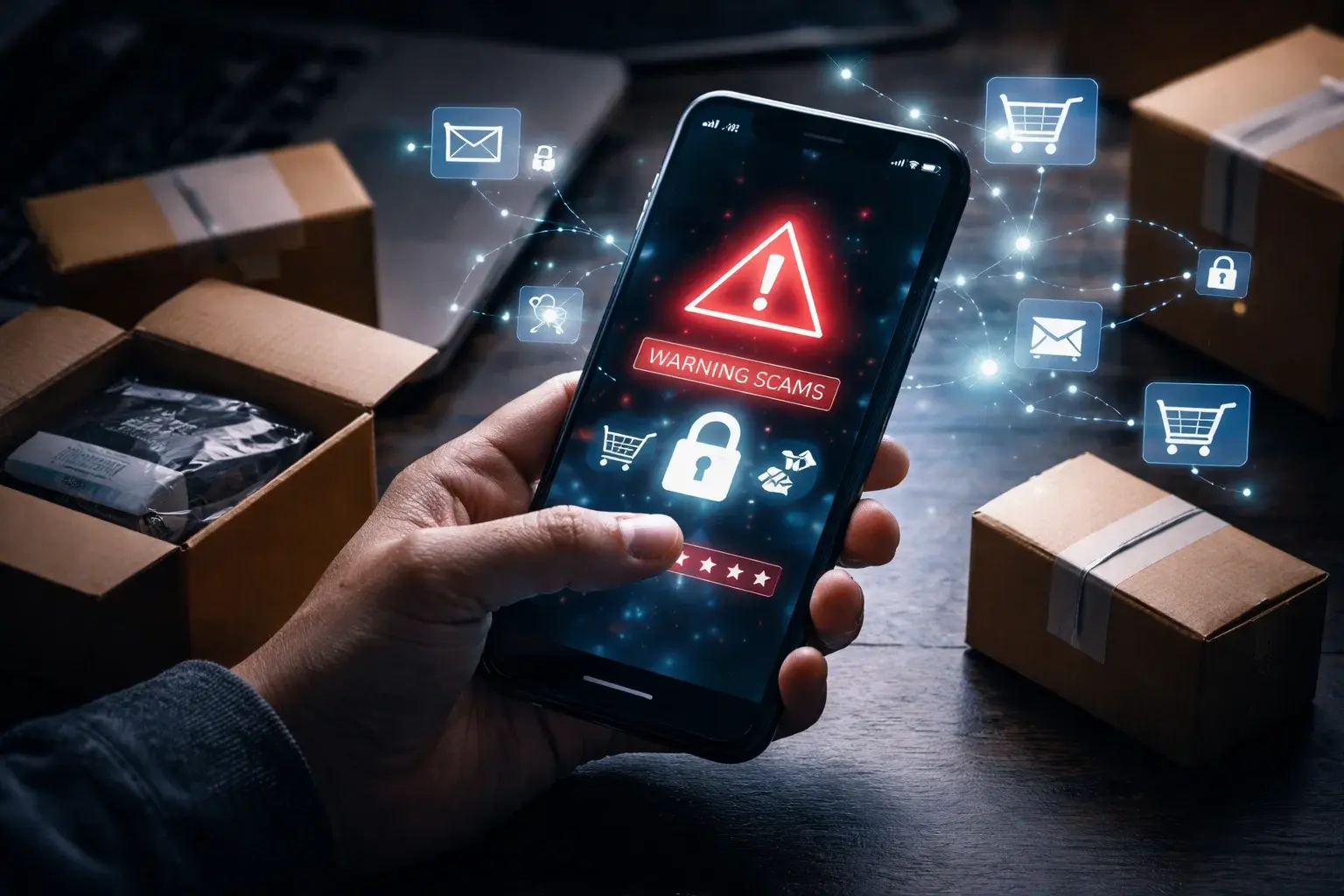
Picture this: you arrive home, open the door, and find a package with your name on it. You don’t remember buying anything, but there it is. No clear note, a cheap product, almost like a gift. You might think it’s a shipping mistake—or a stroke of luck. But it could actually be the first sign that your personal data is already circulating in the wrong hands.
This kind of fraud is called a brushing scam, and while it may seem harmless at first glance, it’s becoming increasingly common in the e-commerce world. At TecnetOne, we want to explain what it is, why it happens, and how you can protect yourself so that "gift" doesn't turn into a bigger problem.
The Context: Huge, Vulnerable E-Commerce
Global e-commerce sales are expected to surpass $6.4 trillion in 2025, and a large portion of that flows through marketplaces. These platforms offer convenience, competitive pricing, and review systems that strongly influence your purchasing decisions.
The problem? These same review systems are now targets for fraud. In 2024 alone, Amazon proactively blocked over 275 million fake reviews and took action against thousands of fraudulent accounts. But fraud keeps evolving—and sneaks into your daily life in new ways.
What Exactly Is a Brushing Scam?
A brushing scam is an e-commerce fraud where a seller sends products to people who didn’t order them, using their personal data without consent. The goal isn’t to gift you something—it’s to generate a fake verified purchase that allows the seller to post a glowing review.
Here's how it usually works:
- The scammer obtains your name and address—often from data breaches, underground forums, people-search sites, or public info online.
- They create a fake buyer account on a marketplace where they sell their products.
- They “buy” their own product using that fake account and ship it to your real address.
- They post a 5-star review that looks like it came from a real, satisfied customer.
- You discover the scam only when the package shows up at your door.
The item is usually cheap, small, and low-quality—because the review is the real goal, not the product.
Why You Should Worry Even If It’s “Free”
Here’s the most common mistake: thinking nothing’s wrong because you didn’t lose any money.
In truth, the package represents a deeper issue.
- Your personal information is being used by third parties—your name and address didn’t end up there by chance.
- Experts warn that brushing can be a testing phase—a way for criminals to verify your data before attempting more serious attacks, such as:
- Identity theft
- Credit fraud
- Targeted phishing
- Sophisticated financial scams
A More Dangerous Variant: When the Package Has More Inside
In some cases, the package contains not just a useless item, but a QR code or card inviting you to “register your gift,” “claim a prize,” or “confirm delivery.”
If you scan that code, you may be taken to:
- A phishing site designed to steal your credentials
- A malware download page
- A form that collects even more personal data
At that point, the scam becomes an active threat to your digital safety.
The Invisible Damage: Eroding Trust in Reviews
Beyond individual risk, brushing scams hurt everyone. By inflating fake reviews, they damage the credibility of rating systems you rely on to decide what to buy.
Over time, it becomes harder to distinguish genuine products from scams—hurting both consumers and honest sellers. It’s a silent fraud with deep consequences across the digital ecosystem.
How to Know If You’re a Brushing Scam Victim
Spotting this scam isn’t hard if you know what to look for. Watch out if:
- You receive a low-value item you didn’t order
- The sender is unclear or missing
- There’s no receipt or explanation
- The package includes a suspicious QR code or link
To confirm, check:
- Your emails for order confirmations
- Your marketplace accounts
- Your bank activity and credit reports
Even if brushing doesn’t charge you, it’s best to make sure the fraud hasn’t escalated.
Similar titles: Amazon Gift Card Mailings Seek to Steal Microsoft Accounts
What To Do If You Receive an Unsolicited Package
If it happens to you, TecnetOne recommends a calm, but smart approach:
- Confirm it’s not a gift by checking with family or friends
- Do not scan QR codes or click any included links
- Monitor your bank and credit accounts for odd activity
- Enable or verify multi-factor authentication (MFA) on banking, email, and shopping platforms
- Report the package to the marketplace (Amazon, AliExpress, etc.)
- Don’t return the item—you can keep or discard it
Remember: the real threat isn’t the product. It’s stopping the fraud cycle.
How to Lower Your Risk of Being Targeted
The key is limiting exposure of your personal data. While you can’t stop every external breach, you can reduce your vulnerability:
Improve your privacy habits
- Share less personal info on social media
- Adjust privacy settings to limit visibility
- Remove sensitive details like your address or phone number
Use identity protection tools
Some services monitor the dark web for compromised data. If alerted, change passwords immediately and consider freezing your credit.
Remove yourself from “people finder” sites
Platforms like BeenVerified, Spokeo, or TruthFinder collect and sell personal data. You can request removal—but it takes effort and should be repeated regularly.
Vigilance Is the New Digital Standard
Brushing scams are just one way criminals monetize your personal data. There’s no single silver bullet. Today, digital protection means ongoing awareness, safe habits, and vigilance.
At TecnetOne, we emphasize that cybersecurity isn’t just technical—it’s behavioral. That surprise package may seem minor, but it might be your first warning sign.
Ignoring it is risky. Understanding and acting on it is your advantage.