 Google Fixes Another Chrome Zero‑Day" loading="eager">
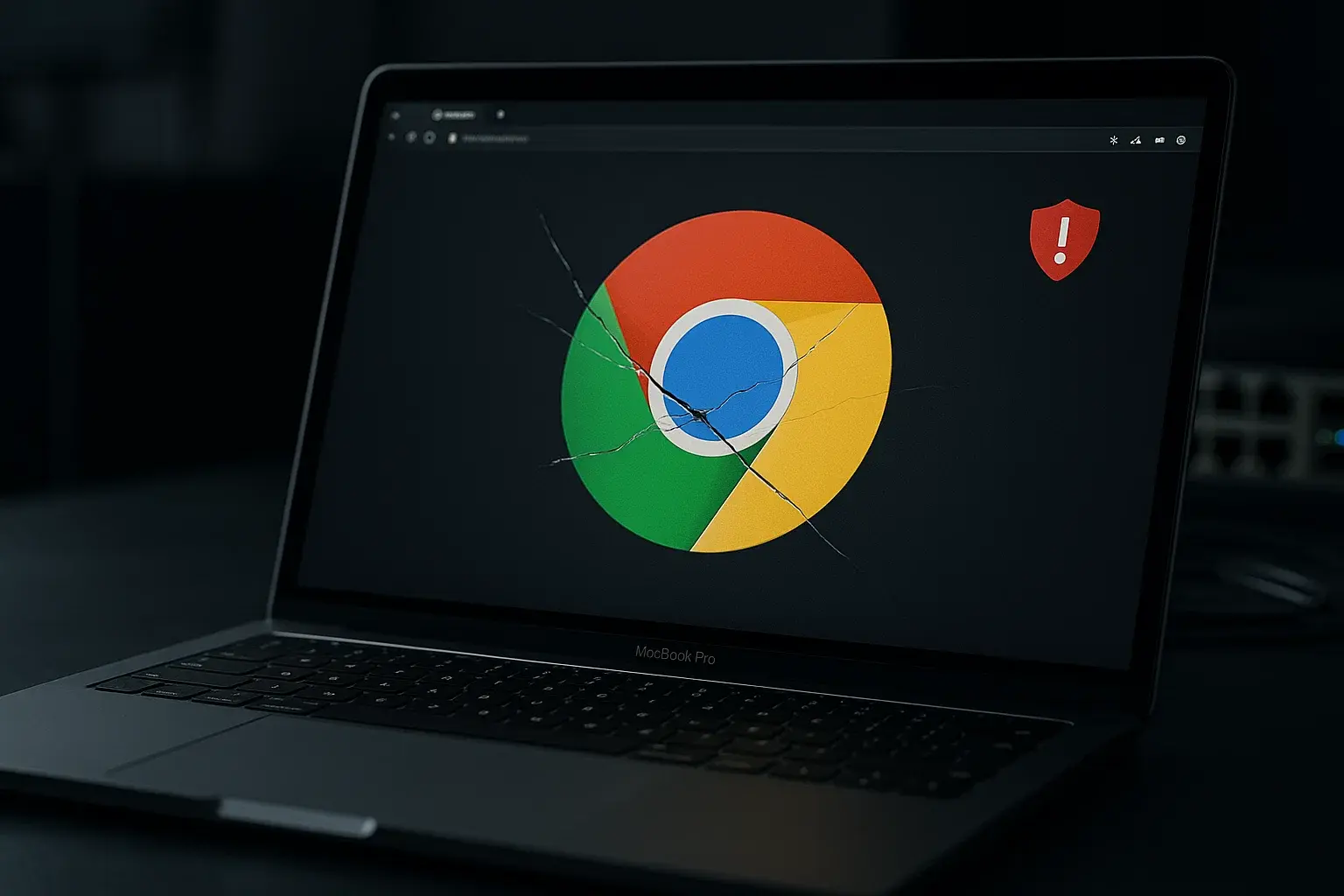
If you use Google Chrome for work, school, or everyday browsing, this news affects you directly. Google has released an emergency update to fix a new zero‑day vulnerability that was already being exploited in real‑world attacks. And yes — it’s the seventh zero‑day so far this year.
At TecnetOne, we explain what this means, how serious it is, how it affects you, and what you should do right now to keep your data safe.
What Vulnerability Was Fixed This Time?
The flaw, identified as CVE-2025-13223, was reported by Clément Lecigne, a researcher from Google’s Threat Analysis Group (TAG). If you’re not familiar with TAG, you should know that it is one of Google’s elite teams focused on investigating highly advanced attacks — especially those linked to:
- Espionage campaigns
- State‑sponsored groups
- Commercial spyware vendors
- Targeted attacks against journalists, activists, politicians, and high‑risk individuals
When TAG is involved, it usually means the vulnerability is being used for highly sophisticated and targeted operations.
In this case, the flaw is a type confusion issue in V8, Chrome’s JavaScript engine. It’s considered critical because it allows arbitrary code execution — meaning an attacker could potentially take control of your browser and, from there, compromise your entire device.
Worst of all: Google confirmed it was already being exploited before the patch was released.
Learn more: Data-stealing Chrome Extensions Impersonate Fortinet, YouTube, VPNs
Why Is This Zero‑Day So Dangerous?
Attacks that exploit flaws in the V8 engine are particularly severe for several reasons:
They allow code execution on your machine
An attacker could use this vulnerability to install spyware, steal your accounts, or deploy malware.
They don’t require installing anything
You only need to visit a malicious website crafted to exploit the flaw.
They are used in highly targeted attacks
TAG has seen similar vulnerabilities used against:
- Journalists
- Human rights defenders
- Opposition politicians
- Business leaders
- NGO workers
- High‑risk users
They’re difficult to detect
As with most zero‑days, attackers use them silently, without raising any visible alerts.
This is why Google keeps these incidents extremely confidential until users have had time to update.
Which Chrome Versions Fix the Vulnerability?
Google released updates for:
- Windows: 142.0.7444.175 / .176
- Mac: 142.0.7444.176
- Linux: 142.0.7444.175
Although the stable rollout is progressive, tests by security media (including BleepingComputer) confirmed the update is available immediately if you check manually.
How to Update Chrome Right Now
Even though Chrome updates on its own, you should do it manually to be sure:
- Open Chrome
- Go to Menu (⋮)
- Select Help
- Click About Google Chrome
- Wait for the update to download
- Click Restart
Done — you’re protected against this specific flaw.
Why Isn’t Google Sharing More Details Yet?
As usual with actively exploited vulnerabilities, Google is limiting available information. They explain:
“Access to bug details will remain restricted until most users have updated.”
This prevents other malicious actors from replicating the exploit before the ecosystem is secured.
If the vulnerability also affects third‑party libraries, Google keeps details restricted until those vendors also release patches.
This is standard procedure for weaponized zero‑days.
Chrome Remains a Prime Target for Zero‑Day Attacks
This patch adds to a long list of critical vulnerabilities fixed recently.
In 2025 alone, Google has already patched six other actively exploited zero‑days, including:
- CVE‑2025‑10585 (July)
- CVE‑2025‑6558 (September)
- CVE‑2025‑4664 (May) — allowed account hijacking
- CVE‑2025‑5419 (June) — another V8‑related flaw
- CVE‑2025‑2783 (March) — reported by Kaspersky
And in 2024, Google fixed ten additional zero‑days, several showcased at hacking competitions like Pwn2Own.
Chrome is one of the most attractive targets worldwide due to its massive user base. If something can compromise Chrome, it can compromise billions of users within hours.
What Does This Mean for You and Your Company?
At TecnetOne, we emphasize one crucial point:
Updating Chrome is no longer optional — it’s fundamental digital hygiene.
A vulnerability like CVE‑2025‑13223 could be used to:
- Inject spyware
- Steal passwords or corporate credentials
- Take control of your browser
- Hijack active Google/Microsoft sessions
- Access business systems
- Compromise poorly protected endpoints
This affects individuals, enterprises, remote employees, BYOD devices, and organizations relying on cloud services.
Similar titles: Chrome Zero-Day CVE-2025-6554 Actively Exploited: Update Now Chrome Zero-Day CVE-2025-6554 Actively Exploited: Update Now
How to Protect Yourself Beyond Just Updating Chrome
Here are TecnetOne’s practical recommendations:
Update Chrome on all devices
Including personal laptops used for remote work.
Remove suspicious extensions
Many attacks combine browser exploits with malicious extensions.
Review everything at: chrome://extensions
Deploy advanced endpoint protection
Behavior‑based EDR detects exploitation attempts — even zero‑days.
Keep your operating system updated
A patched browser on an outdated OS is still vulnerable.
For companies: enforce automatic updates
Chrome supports forced patching via group policies.
Train your teams
Many high‑level attacks combine technical exploits with social engineering.
In Summary
Google has patched a critical vulnerability (CVE‑2025‑13223) that was already being used in real‑world attacks. It’s the seventh Chrome zero‑day in 2025, a clear reminder that browsers are one of the primary modern attack surfaces.
Immediate solution: update Chrome now.
Long‑term solution: strengthen your cybersecurity strategy — and at TecnetOne, we can help you assess risks, reinforce your systems, and train your team.